9 Vertical Garden Ideas for Narrow Fence Lines and Bare Walls
A narrow fence line can hold a surprising amount of greenery without taking over the yard. These nine setups account for drilling rules, loaded weight, drainage, sun exposure, and the maintenance that vertical gardens actually require.
1. Build a Freestanding Planter Wall That Sits Beside the Fence
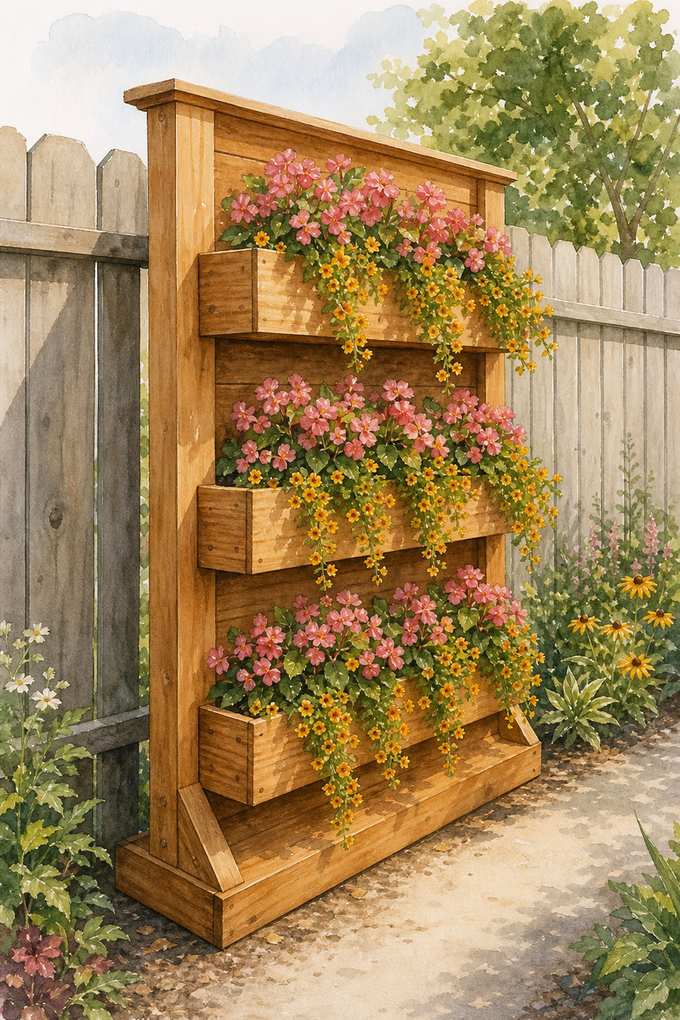
A freestanding planter wall gives renters the look of a fence-mounted garden without putting a single screw into the property. Use two 6-foot cedar posts, a weighted base, and three removable planter boxes no deeper than 8 inches so the structure does not swallow the walkway. Before planting, calculate the wet weight: a 24-inch box filled with damp potting mix can easily exceed 30 pounds. The base needs to resist both that load and wind pushing against the leafy surface. Compact begonias suit shade, while calibrachoa handles sunnier spots. This setup costs more lumber than simple hooks, and the base still occupies roughly 12 inches of ground, but it can move with you.
2. Add Removable Planter Boxes to Fence-Rail Cleats
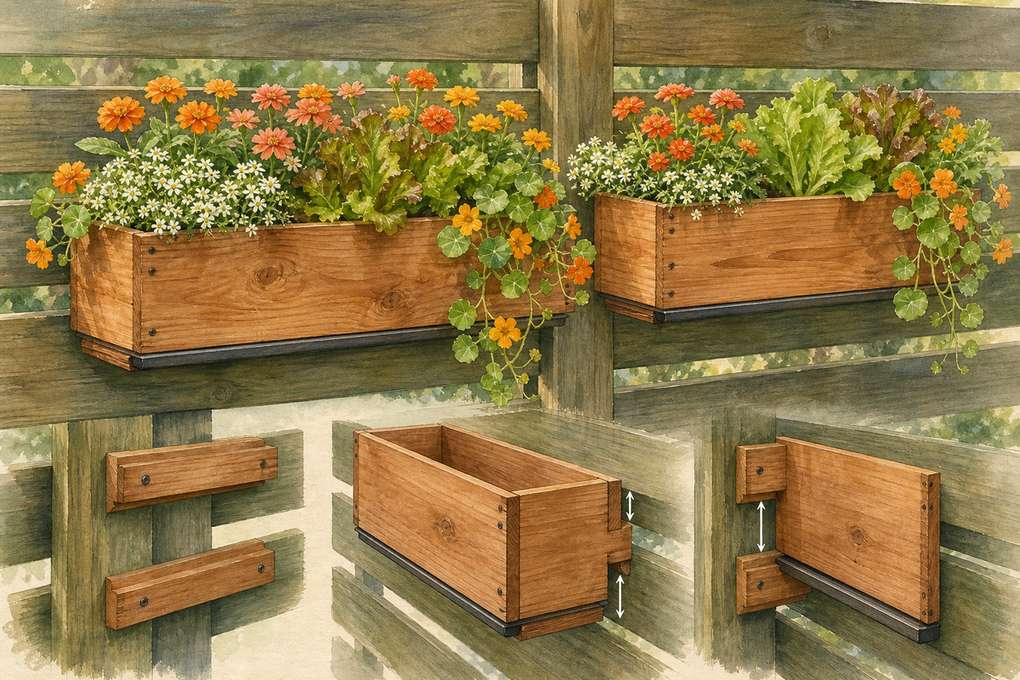
French cleats let you lift planter boxes off the fence for pruning, repainting, or winter storage. Fasten one half of each cleat into structural fence rails rather than thin pickets, then keep boxes around 24 inches wide and 6 to 8 inches deep. That size works for alyssum, dwarf zinnias, lettuce, or trailing nasturtiums without creating an oversized wet-soil load. This is an owner-approved project: screws can split old cedar, and attaching anything heavy to a shared or leaning fence is a bad bet. Leave at least 1 inch behind each box for airflow, and install drainage holes that empty into gravel or a narrow catch tray. The downside is regular watering; shallow boxes may need daily attention during a hot July week.
3. Train One Flowering Vine Across Stainless-Steel Wires
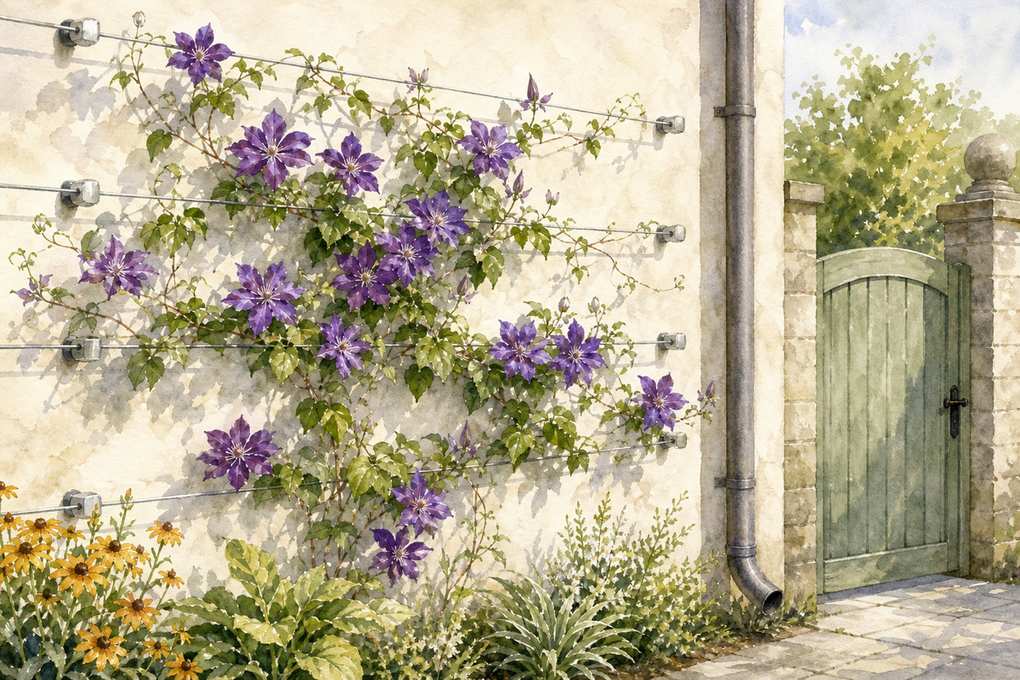
A simple wire system creates a green wall without the bulk of a wooden trellis. Run plastic-coated or stainless-steel wire horizontally every 12 to 18 inches, holding it about 2 inches off the surface with eye bolts and spacers. Check ownership before drilling into a fence, brick wall, or siding; masonry and exterior cladding require the correct anchors and permission. Clematis works well because its leaf stems can grab thin supports, while star jasmine suits warm climates and sheltered walls. Avoid English ivy, which can enter cracks and become difficult to remove. Wires nearly disappear once plants fill in, but they are not maintenance-free: tie in new growth monthly and keep vigorous stems away from gutters, gates, and neighboring property.
4. Stack Shallow Rain Gutters for Strawberries and Lettuce
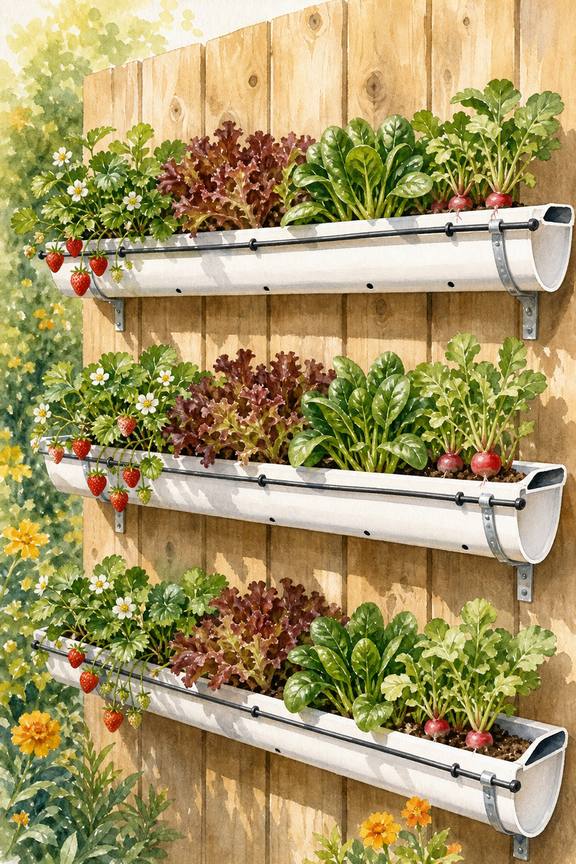
Three short lengths of vinyl rain gutter can turn a sunny fence into a narrow strawberry or salad garden. Mount 4-foot sections at least 12 inches apart, add end caps, and drill drainage holes every 8 to 10 inches. Gutters hold little soil, so choose shallow-rooted crops such as leaf lettuce, radishes, alpine strawberries, and baby spinach rather than tomatoes or full-size peppers. Use new food-safe vinyl or metal, not salvaged material with peeling paint. The important constraint is water: gutters dry quickly in sun yet can become soggy if their outlets clog. A thin drip line makes upkeep easier, but check it weekly. Mount the lowest tier high enough that splashing soil does not coat the leaves during heavy rain.
5. Hang a Fabric Pocket Garden on a Protected Wall
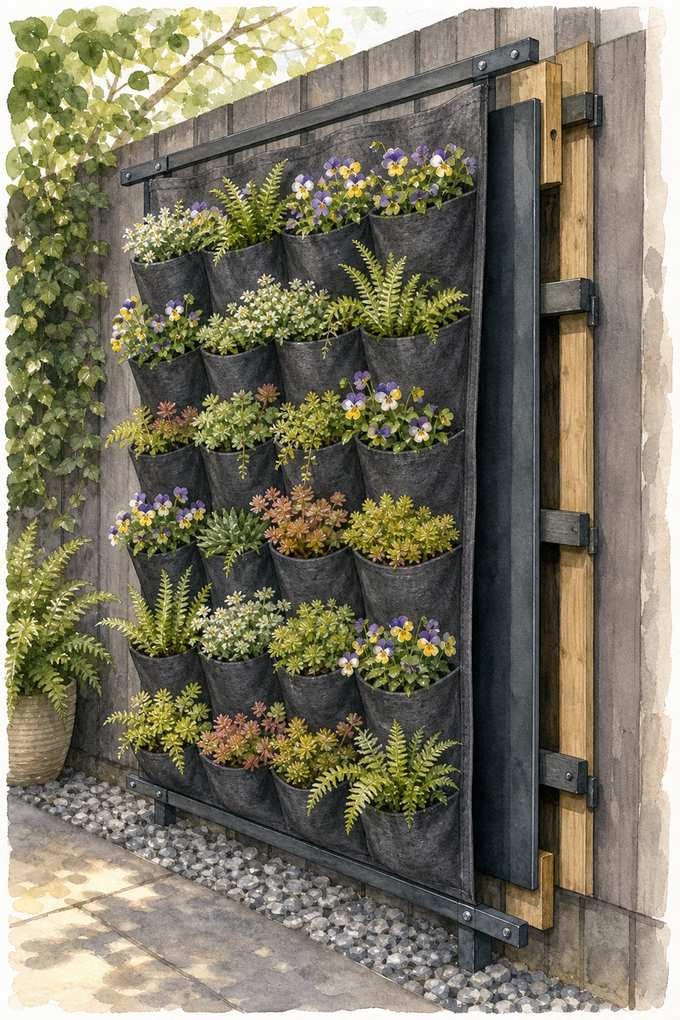
A fabric pocket panel is useful where the planting depth must stay under about 6 inches. Fill individual pockets with a lightweight container mix and use them for violas, sweet alyssum, small ferns, or sedum rather than woody shrubs. A fully watered 24-pocket panel is much heavier than it looks, so suspend it from masonry anchors or several structural fence rails—not one decorative hook. Protect siding and wood with a 1-inch air gap plus a rigid waterproof backing, and make sure runoff reaches gravel or a collection tray. Fabric dries from every side, which helps prevent waterlogging but raises watering frequency. It also deteriorates in strong sun; expect inexpensive felt pockets to fade or weaken before a solid cedar planter would.
6. Espalier a Dwarf Apple Tree Flat Against the Fence
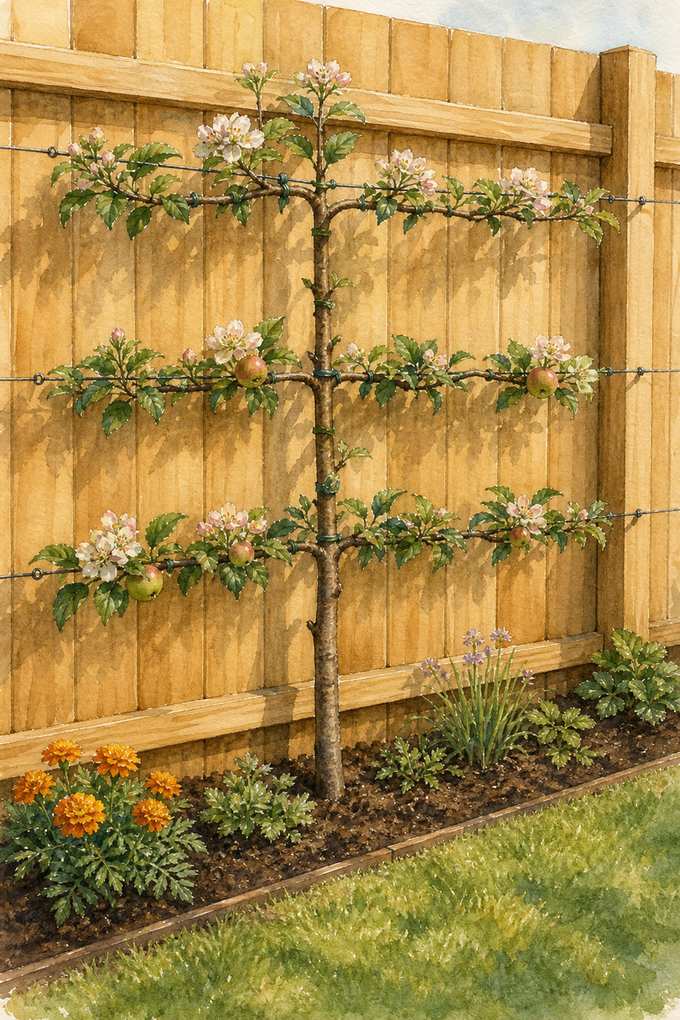
An espaliered dwarf apple tree supplies blossom, fruit, and year-round structure while projecting only about 18 to 24 inches from the fence. Plant the trunk at least 8 inches away from the boards, then train branches along three horizontal wires spaced roughly 18 inches apart. Choose a dwarf rootstock suited to your USDA zone, and confirm whether the cultivar needs a compatible pollination partner nearby. A south- or east-facing position generally gives fruit the best chance; a deeply shaded north fence will disappoint. Espalier is a patient project rather than instant coverage, with summer pruning and regular tying required for several years. It is also unsuitable beside a failing fence because the support wires need a stable, long-term anchor.
7. Lean a Hinged Lattice Garden Against the Wall
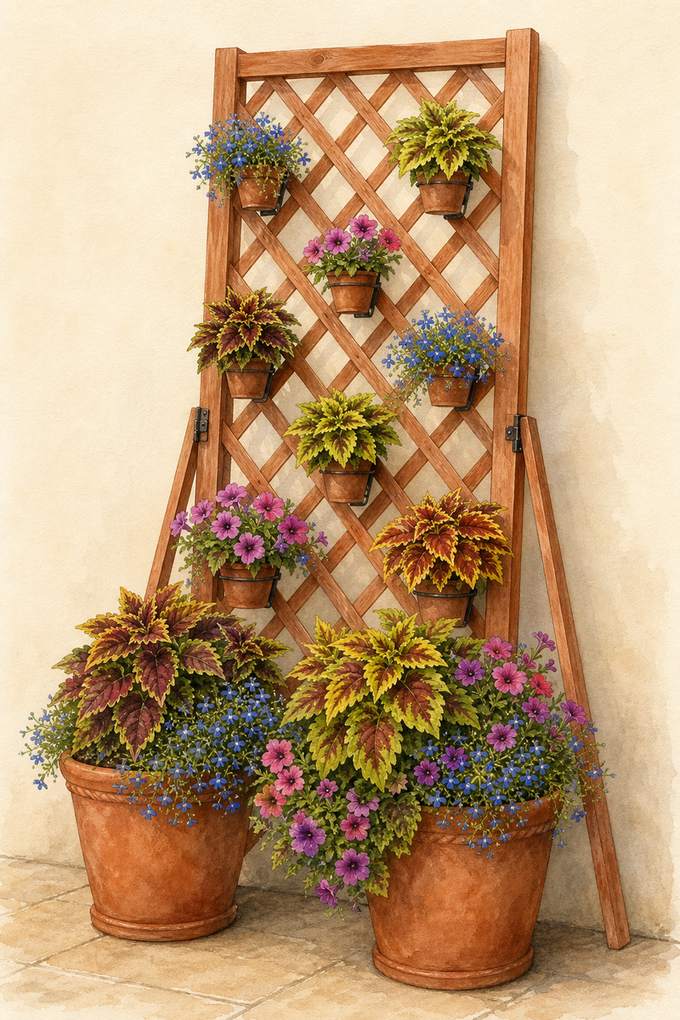
A hinged lattice panel can stand at a slight angle against a wall without permanent mounting, making it practical for renters and seasonal gardeners. Build a 3-by-6-foot frame from cedar strips, add rear braces, and secure the bottom with two heavy planters so it cannot tip forward. Clip lightweight 6-inch pots to the lattice for petunias, compact coleus, or trailing lobelia; keep the heaviest containers near the base. Wind is the deciding factor. A leafy panel behaves like a sail, so this is not a safe setup for an exposed side yard unless the top can be tethered with permission. The angled frame also uses 12 to 18 inches of floor depth, but it folds flatter than a fixed shelving unit when winter storage is tight.
8. Use Slim Wall Boxes for a Shady North-Facing Fence
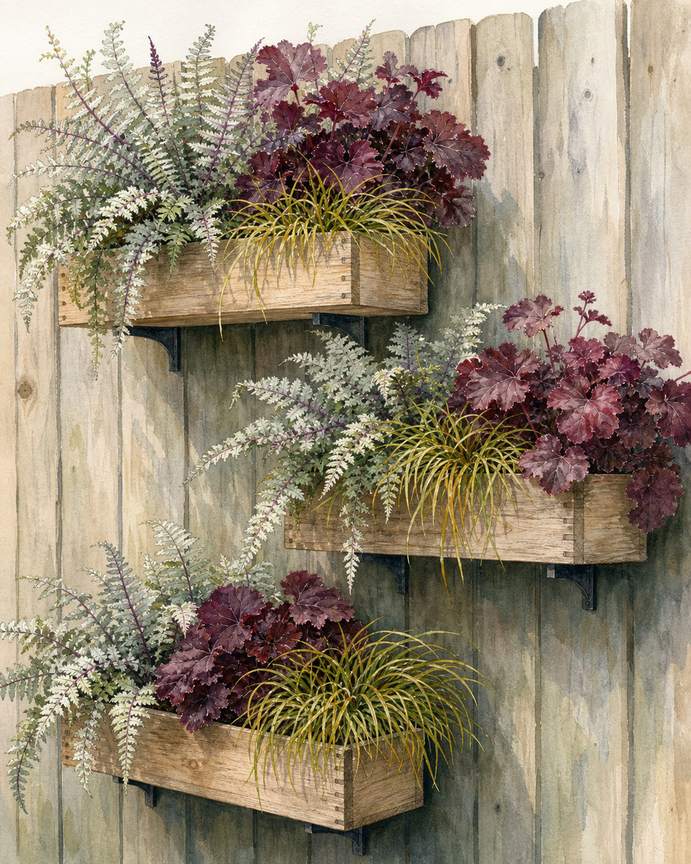
A north-facing fence can still support a layered wall garden if you choose foliage plants instead of forcing sun-loving flowers. Arrange three 7-inch-deep boxes in a staggered pattern and plant Japanese painted fern, heuchera, and compact Carex varieties that suit your local climate. Observe the site first: bright open shade is different from the dense darkness beneath an overhang. Boxes should sit at least 1 inch off wood so damp leaves and trapped compost do not speed rot. Shade slows evaporation, so test the mix with a finger before watering rather than following a daily schedule. Slugs may find the cool boxes quickly, and heuchera crowns can rot when buried too deeply. The payoff is dependable texture without pretending the fence receives six hours of sun.
9. Hook a Modular Wire Grid Over the Fence Top
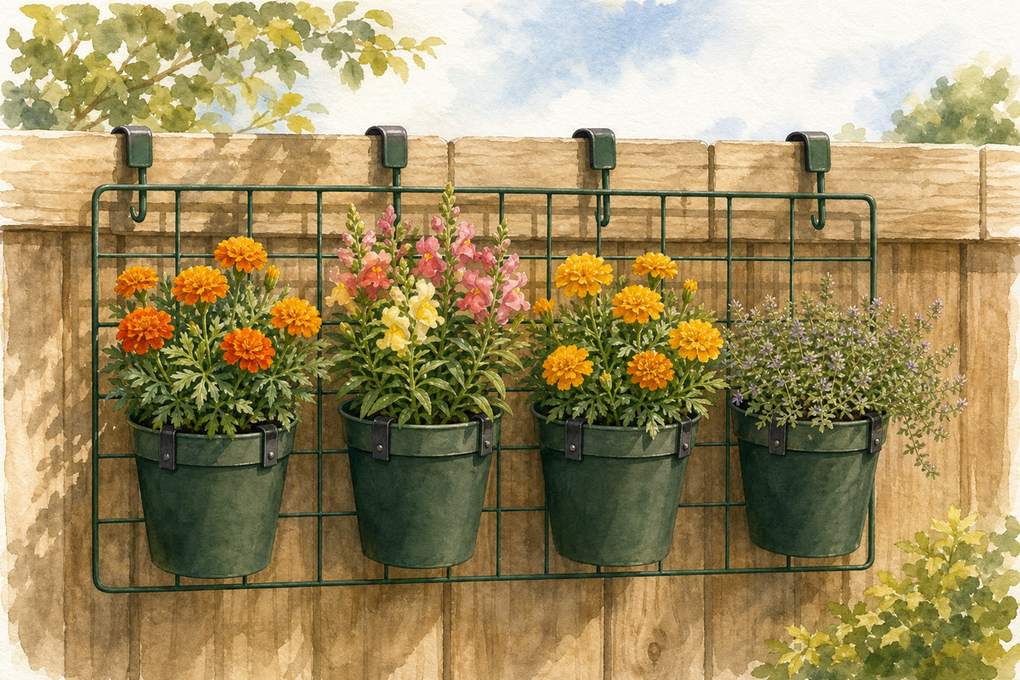
An over-fence wire grid creates removable hanging space without drilling, provided the fence top and landlord can handle it. Choose powder-coated steel panels with broad padded hooks, then hang several small resin pots rather than one large ceramic trough. Four 8-inch pots spread across a 3-foot grid distribute weight better and can hold dwarf marigolds, compact snapdragons, or ornamental thyme. Measure the fence cap before buying hooks, and add rubber padding so metal does not scrape paint or trap water against wood. Keep every pot on your side of the property line, including trailing stems and runoff. The main drawback is movement: pots can rattle or swing in wind, so use locking clips and remove the panel before severe storms or winter ice.
Common questions
- How do I know whether a fence can hold a vertical garden?
- Inspect the posts, rails, fasteners, and any leaning or rot before adding weight. Attach loads to structural rails or posts rather than individual pickets, and remember that wet potting mix is considerably heavier than dry mix. For a shared, rented, or HOA-controlled fence, get written permission; when capacity is uncertain, use a freestanding or ground-braced design instead.
- How often does a fence-mounted garden need watering?
- Shallow gutters and 6- to 8-inch boxes may need daily watering during hot, windy weather, while shaded wall boxes can stay damp for several days. Check the top inch of mix rather than watering by the calendar. A drip line helps, but inspect emitters weekly because one clogged outlet can leave an elevated planter dry before the problem is visible.
- What can stay outside on a vertical garden through winter?
- That depends on your USDA zone, container material, and exposure. Freeze-thaw cycles can crack terracotta, while small pots allow roots to become colder than plants growing in the ground. Remove annuals, drain irrigation lines, and store lightweight panels before ice storms. For perennials, choose plants rated at least one or two zones colder than your location or move containers to a protected spot.
- How can I stop water from damaging the fence or wall?
- Maintain roughly a 1-inch airflow gap, use intact waterproof backing where appropriate, and direct drainage into gravel or removable trays. Never seal a planter flat against wood siding or fence boards. Empty catch trays after rain so roots do not sit in water, and check the surface twice a year for peeling paint, staining, soft wood, or blocked drainage holes.