9 Vertical Herb Garden Ideas for Walls and Tight Spaces
Short on floor space but still want fresh herbs? These nine vertical setups use walls, pallets, pockets, and freestanding supports, with practical notes on weight, drainage, sunlight, and renter rules.
This page contains affiliate links — we may earn a commission at no extra cost to you. See our disclosure.
1. Mount a rail with removable herb pots
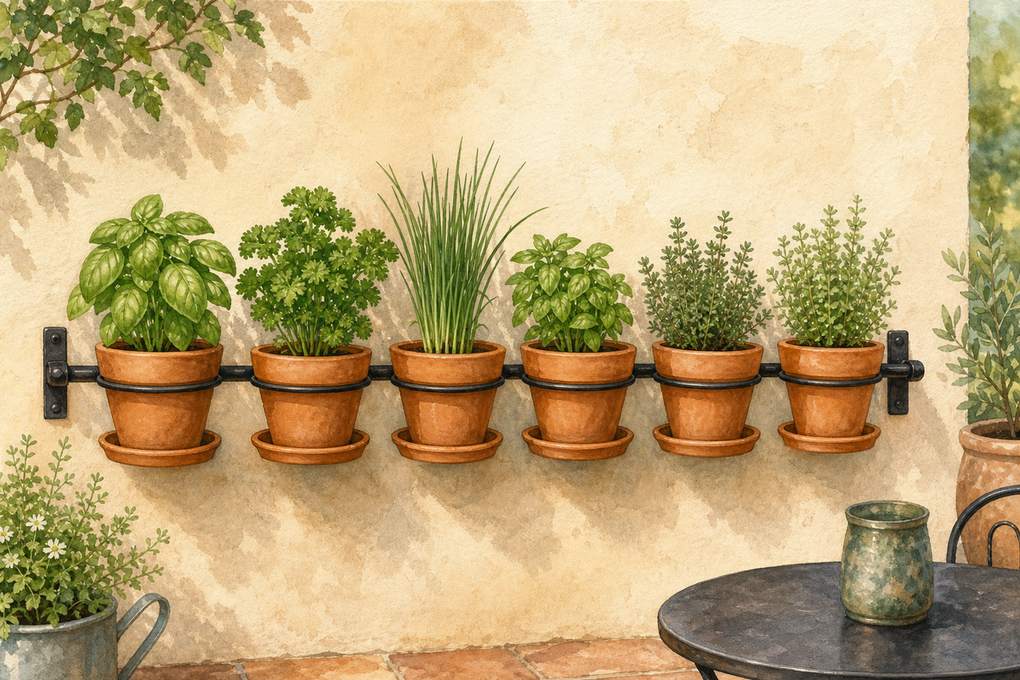
Mount one metal planter rail, then hang four to six removable pots from it rather than fastening every pot separately. A 36-inch rail can hold basil, parsley, chives, and thyme without swallowing the whole wall. Find a stud or use anchors rated for the wall material and the planter's wet weight; a 6-inch pot can weigh 5 to 8 pounds after watering. Renters should get written permission before drilling. Add individual saucers or place the rail above a narrow catch tray, since water streaks on siding are surprisingly stubborn. The downside is uneven drying: pots at the sunny end may need water a day earlier than shaded ones.
2. Build a freestanding pallet herb wall
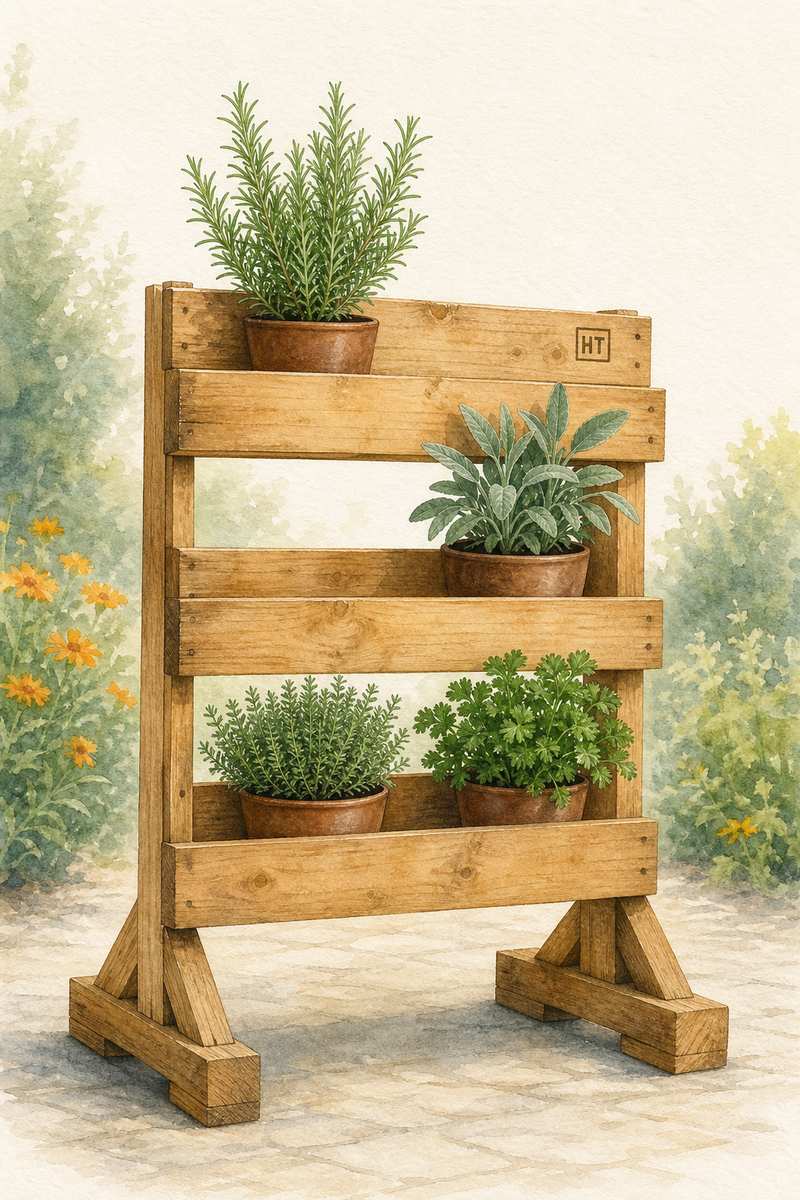
Stand a pallet upright on a shallow base and turn its horizontal slats into three planting shelves. Choose a pallet stamped HT for heat treatment, not MB, and skip any pallet with oil stains or an unknown industrial history. Line each shelf with landscape fabric, then set separate 6-inch nursery pots inside so roots and damp soil never touch the wood. A pallet can become top-heavy once watered, so screw it to a 20- to 24-inch-deep base or secure it with removable railing ties where allowed. Rosemary and sage belong low, while lighter pots of thyme can sit higher. Its main drawback is bulk: even a narrow pallet usually projects about 18 inches after bracing.
3. Hang breathable pockets for shallow-rooted herbs
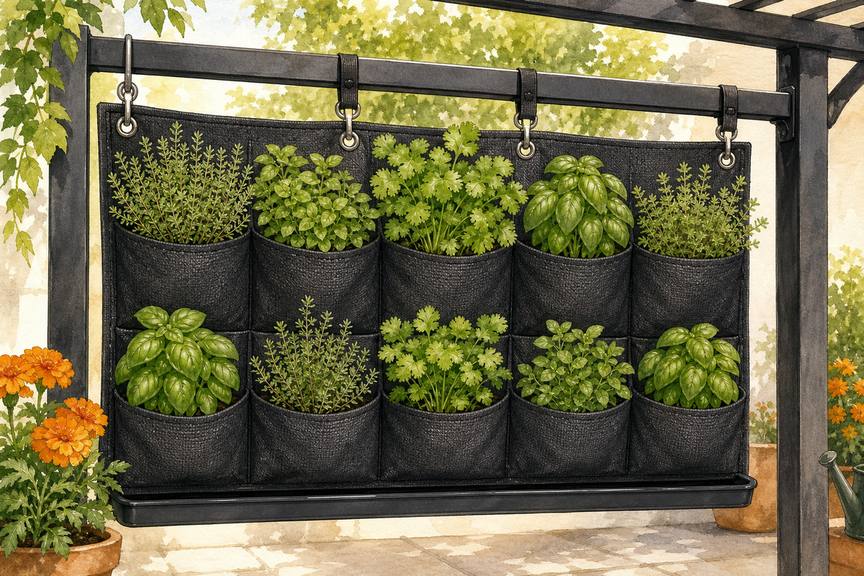
A fabric pocket panel puts eight or ten herbs on a patch of wall barely 2 feet wide. Use it for shallow-rooted plants such as thyme, oregano, cilantro, and compact basil rather than mature rosemary, which wants more soil. Felt pockets dry quickly in heat and wind, sometimes within a single afternoon, so mix in coconut coir and check moisture with a finger each morning. Hang the panel from a load-rated hook or railing frame and keep a waterproof backing plus a drip tray behind it. Dark fabric can also heat roots against a west-facing wall. This is an inexpensive setup, but expect to replace sun-weakened fabric after a few seasons.
4. Repurpose an over-door organizer
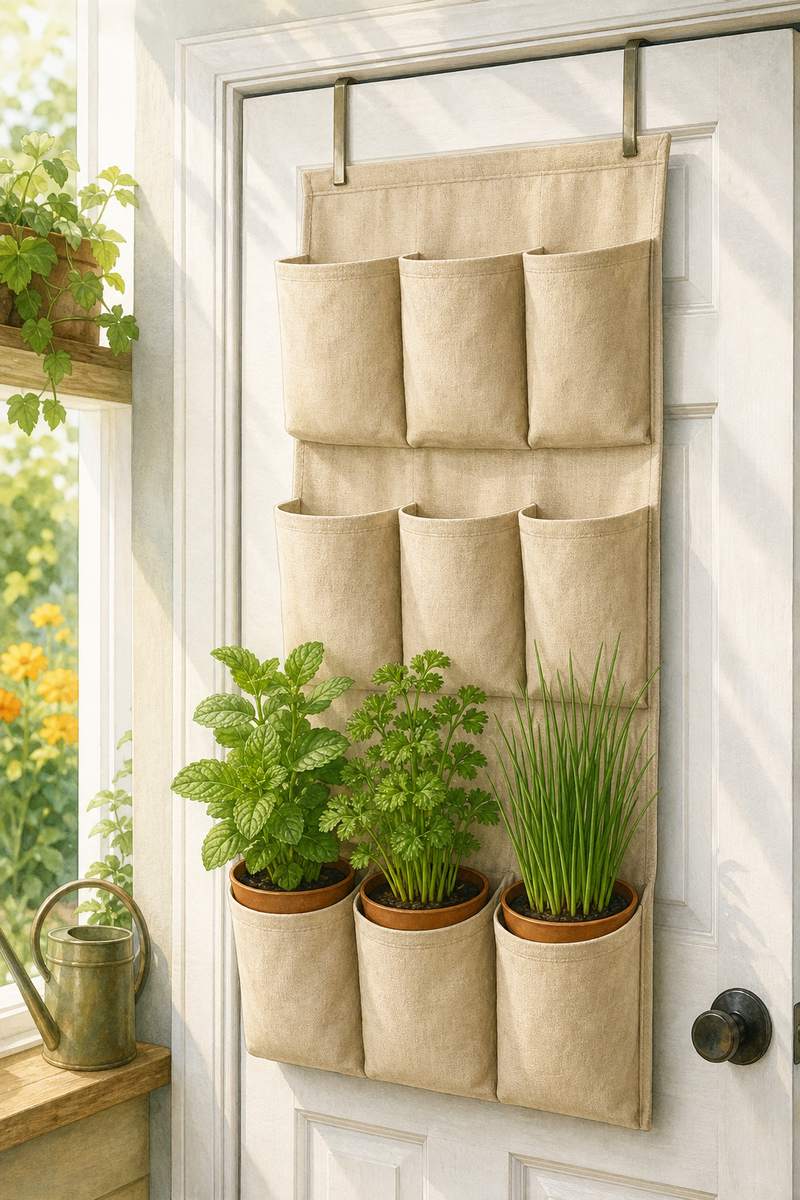
A canvas over-door organizer makes a drill-free herb garden on a sturdy exterior door or utility-room door with good light. Fill only the lower six to eight pockets with lightweight 4-inch nursery pots; loose soil makes the organizer sag and leaves the door permanently damp. Mint, parsley, and chives tolerate the smaller root space better than woody sage. Check that the hooks do not pinch the weather seal, and confirm the loaded organizer clears the doorframe when the door swings. Water the pots in a sink or use removable liners, because runoff can stain both paint and flooring. The compromise is access: this works best on a door that is opened occasionally, not twenty times a day.
5. Use a tension pole with herb baskets
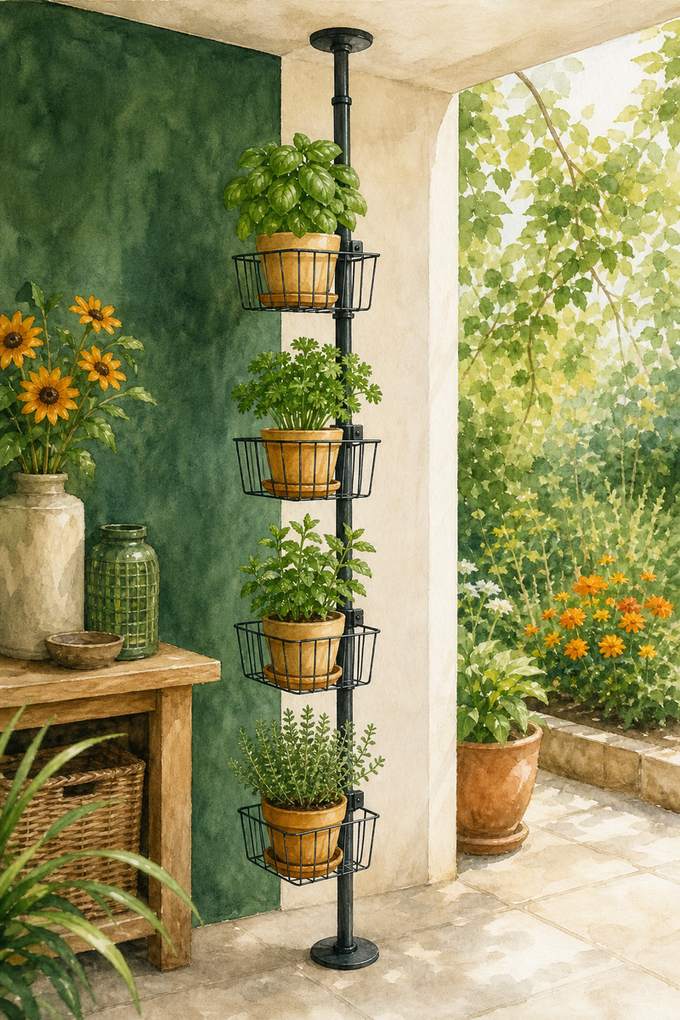
Fit a floor-to-ceiling tension pole with three or four small baskets when drilling is off-limits. This works on a covered patio or beside a bright window, provided both contact surfaces are flat and solid. Do not brace it against a suspended ceiling panel, and follow the manufacturer's height and load limits; wet planters are much heavier than empty display pots. Keep each basket to one 5-inch pot, pairing basil near the brightest level with parsley or mint lower down. Put a saucer beneath every pot and retighten the pole monthly, especially after temperature swings. It saves wall space, but a bumped or poorly seated pole can slip, so it is a bad match for homes with climbing toddlers or energetic pets.
Product pick — a load-rated tension pole planter
6. Arrange pots on an outdoor pegboard
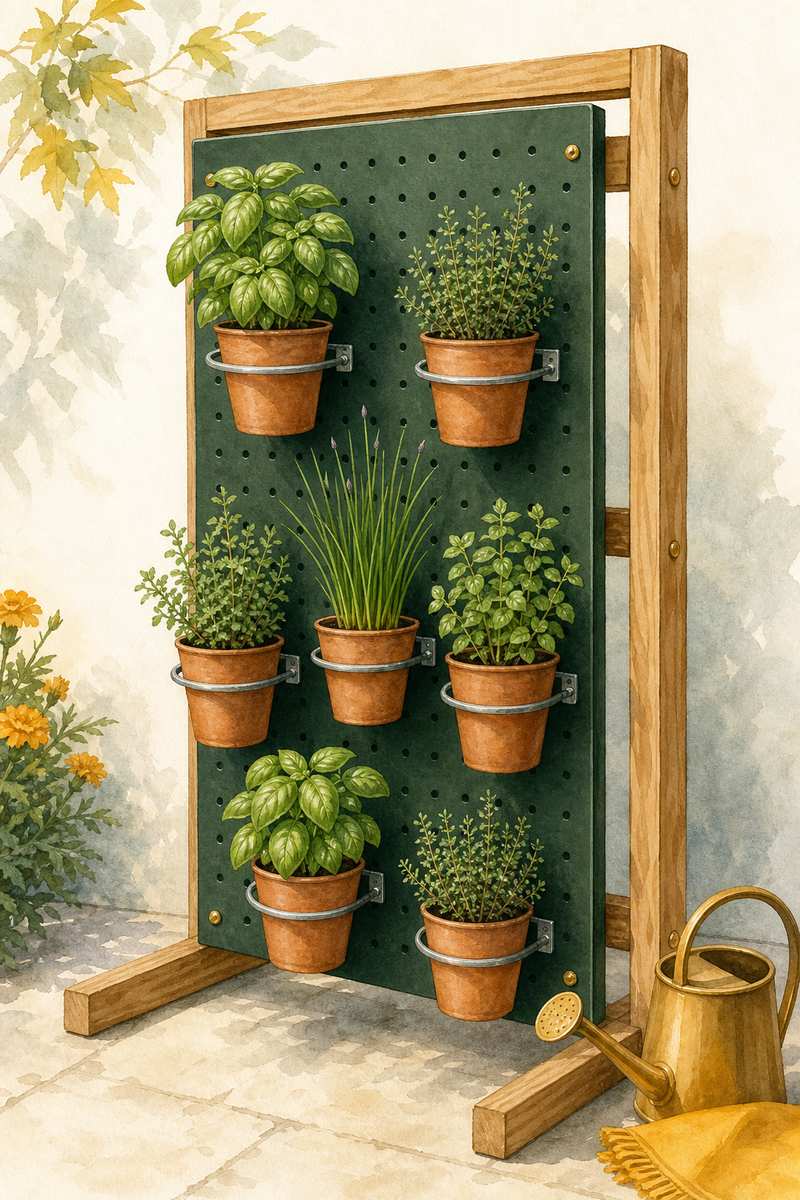
An outdoor-rated pegboard lets you move herb pots as plants grow instead of committing to fixed rows. Use powder-coated steel or HDPE pegboard rather than indoor hardboard, which swells after repeated watering. Space 5-inch pot rings at least 8 inches apart so basil leaves do not smother slower-growing thyme. The board needs a 1-inch air gap behind it for hooks and ventilation, plus fasteners suited to the wall and the full wet load. On a rental patio, mount the board inside a freestanding lumber frame instead. Pegboard hardware costs more than simple hooks, and cheap rings can bend; test each holder with a freshly watered pot before placing it above another plant.
7. Stack gutter planters on a narrow frame
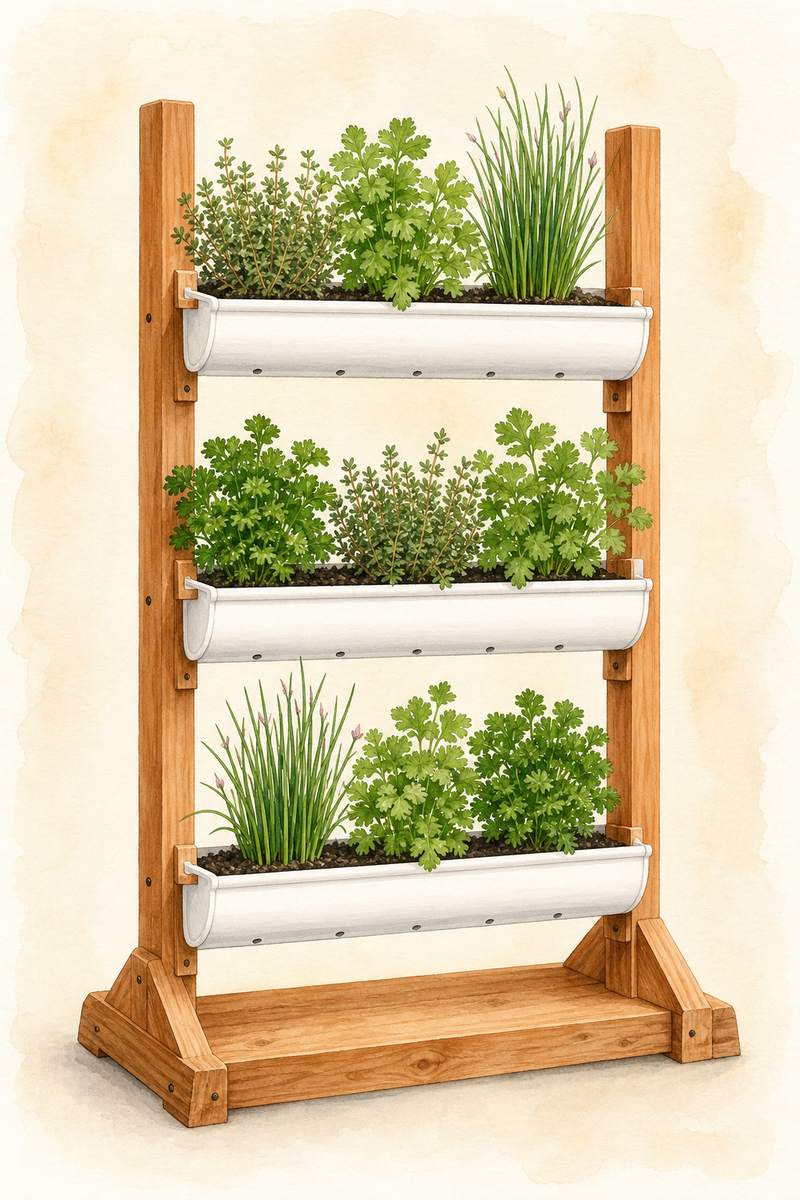
Attach three 30-inch lengths of new vinyl gutter to a freestanding frame for a slim herb tower. Drill drainage holes every 6 inches and leave at least 10 inches between tiers, or the upper gutter will shade the one below. The shallow channels suit thyme, cilantro, chives, and leaf parsley; mint will spread through an entire row unless you keep it in its own pot. Use new guttering rather than salvaged material with peeling paint or mystery residue. A 50:50 mix of potting soil and coir keeps the load manageable, but these narrow beds still dry fast in summer. The frame needs a wide foot or railing tie because the broad front catches wind.
8. Lean a ladder planter against a sunny wall
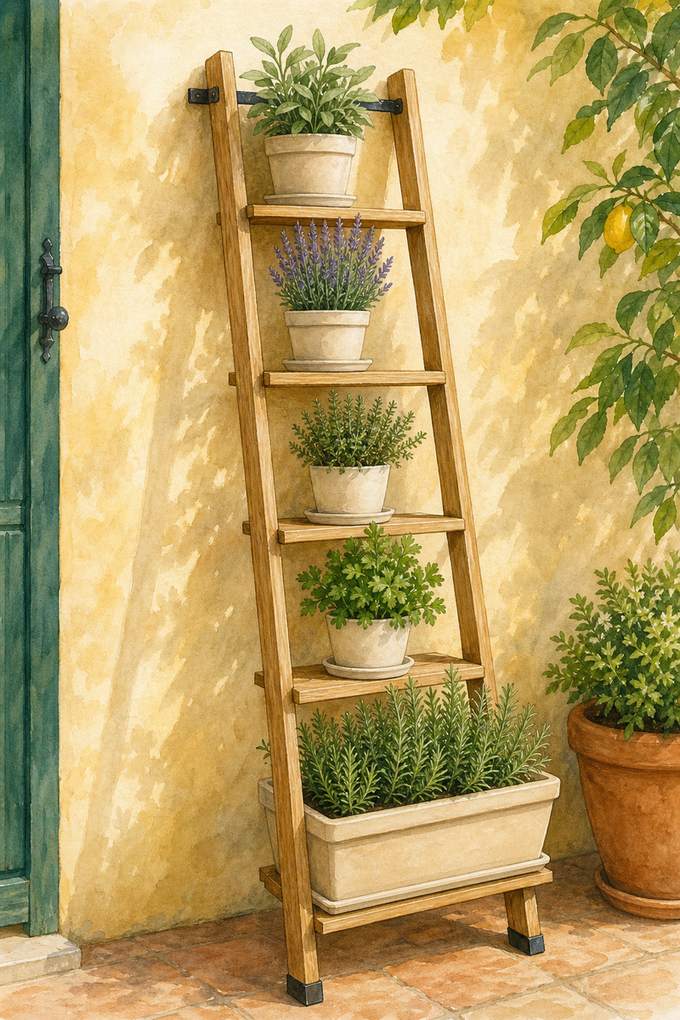
A five-rung wooden ladder can hold herb boxes without taking more than about 18 inches of floor depth. Set the largest box on the bottom rung and reserve the upper rungs for lighter 4- or 5-inch pots. Rosemary, sage, and lavender need the sunniest positions and sharply draining mix; parsley can handle a little shade near the bottom. Add rubber feet and secure the ladder at the top with a removable strap if your lease permits, since a decorative lean is not enough in wind. Keep the angle shallow enough that pots sit level, and use boxes with matching drip trays. The trade-off is reach: watering the highest rung can be awkward for shorter gardeners.
9. Roll a wire-grid herb tower toward the sun
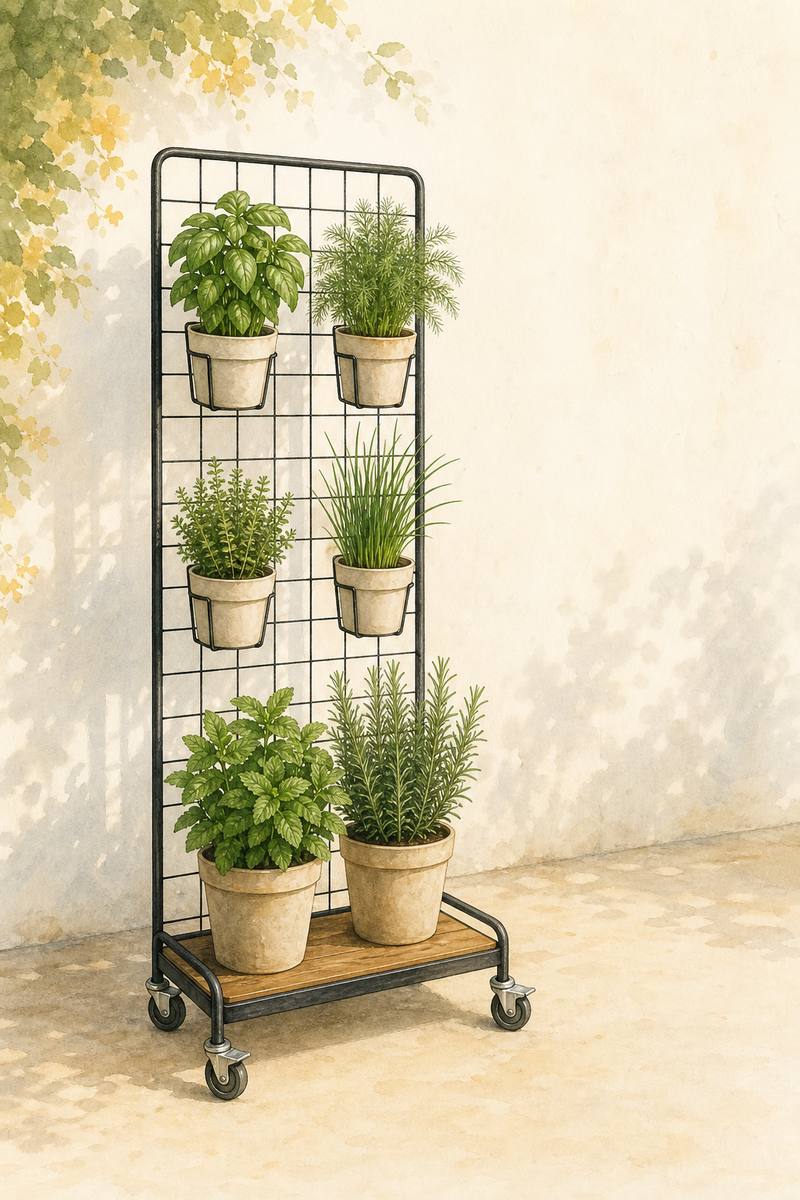
Build a mobile herb wall by fixing a 4-foot wire grid to the back of a narrow utility cart and clipping small pot holders to it. Locking casters let you roll basil and dill into six hours of sun, then tuck the cart against a wall when you need the walkway. Keep heavier 6-inch pots of mint and rosemary on the cart's bottom shelf, with lighter thyme and chives on the grid. Measure thresholds first; tiny casters struggle with a lip taller than about half an inch. Use saucers and leave 2 inches between the grid and wall for airflow. Mobility is useful, but a fully watered cart can be cumbersome, and it should stay parked during strong wind.
Product pick — a narrow utility cart with locking casters
Common questions
- How much weight can a wall-mounted herb garden hold?
- That depends on the wall, fastener, and bracket, so use the lowest published rating among those three parts. Weigh one fully watered pot rather than estimating from its empty weight; a 6-inch container often reaches 5 to 8 pounds. Renters should get permission before drilling, and masonry, drywall, and siding each require different fasteners.
- How much sunlight do herbs need in a vertical garden?
- Basil, rosemary, sage, and thyme grow best with about 6 or more hours of direct sun. Parsley, mint, chives, and cilantro can produce with roughly 4 hours, though growth may be looser. Watch the lower tiers because upper planters can cast more shade than the wall itself.
- How do I stop a vertical herb garden from drying out?
- Use containers at least 5 to 6 inches deep, add coconut coir to the potting mix, and group plants with similar water needs. Check fabric pockets and gutter planters daily during hot or windy weather. Self-watering inserts help, but every container still needs an overflow route and a saucer or catch tray.
- Can a vertical herb garden stay outside over winter?
- Tender basil and cilantro usually finish with frost, while mint, chives, thyme, and some oregano may return if they are hardy in your zone. Containers expose roots to colder air than garden beds, so check your USDA zone and the plant's hardiness. Move small pots to a protected spot and empty any irrigation reservoir before a freeze.