9 Vertical Succulent Garden Ideas for Dry Climates and Renters
Hot, dry balconies reward succulents, but walls, weight limits, and lease rules complicate the usual living-wall plans. These nine vertical setups use movable supports, fast-draining containers, and heat-tough plants without treating every sunny rental like the same space.
1. Lean a cedar ladder against the wall
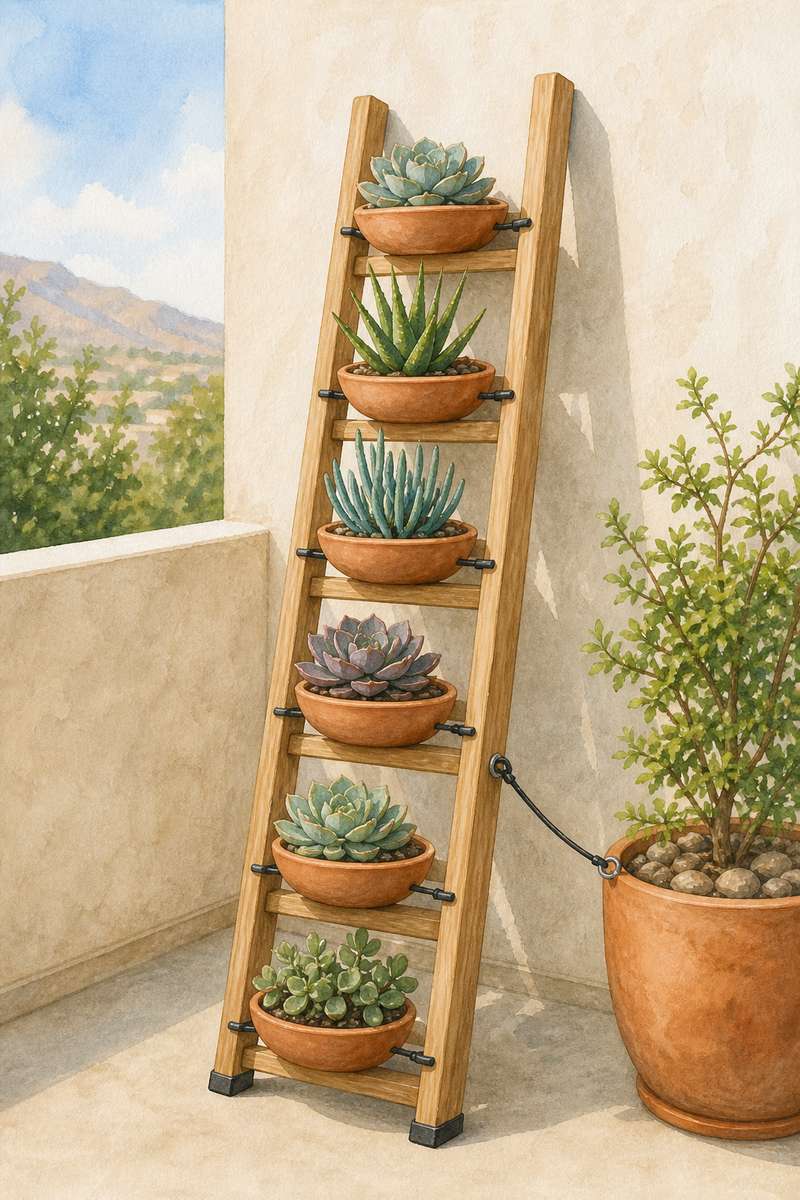
A narrow cedar ladder turns six shallow pots into a vertical display without putting holes in stucco. Choose a ladder about 5 feet tall with 12-inch-wide rungs, then secure each pot with a metal ring or UV-rated strap rather than simply balancing it. Echeveria, compact aloe, and blue chalk sticks handle reflected heat if they are eased into full sun over a week. Set the feet on rubber pads and tether the top to a 20-pound planter if wind can funnel across the balcony. The catch is watering: upper pots drip onto lower rosettes, where trapped moisture can cause rot. Take pots down to water, let them drain, and return them dry.
2. Hang felt pockets from a tension rod
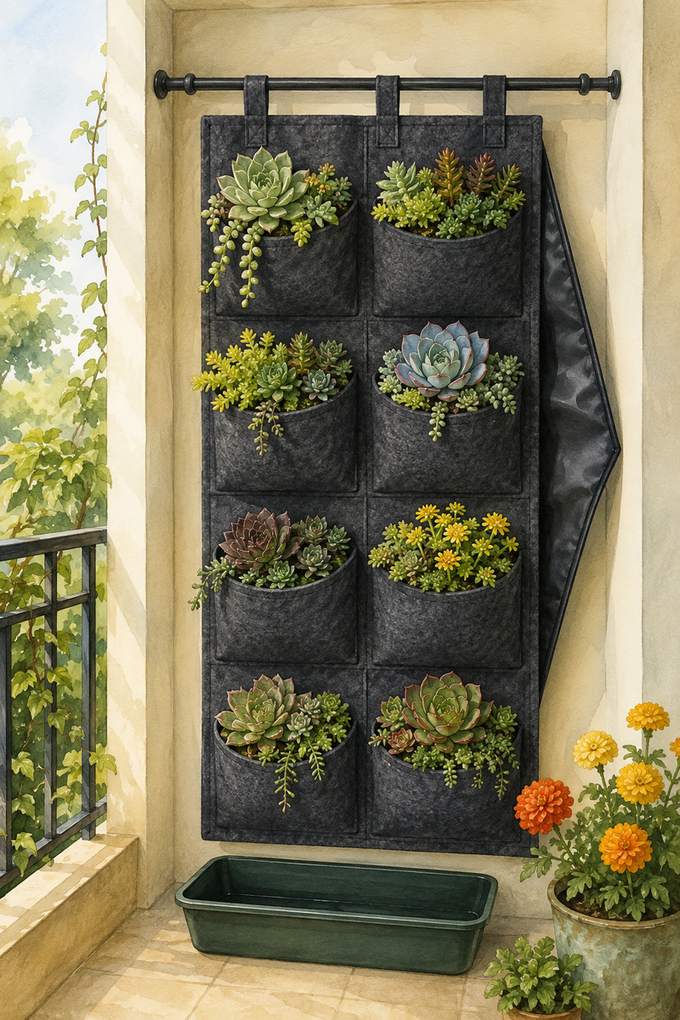
A reinforced felt pocket panel can hang from a heavy-duty tension rod inside a recessed balcony opening, leaving the wall and railing untouched. Limit the panel to about 24 by 36 inches and fill eight pockets with a gritty mix of equal parts cactus soil, pumice, and coarse mineral grit. Small sedums and sempervivums cope better than large aeoniums with the shallow root space. Test the rod with the fully watered panel before standing beneath it, and never span an open exterior gap where a falling planter could leave the property. Felt dries fast in desert wind, sometimes within a day. It also stains light walls, so add a removable waterproof backing and water the panel over a tub.
3. Clip nursery pots to a freestanding wire grid
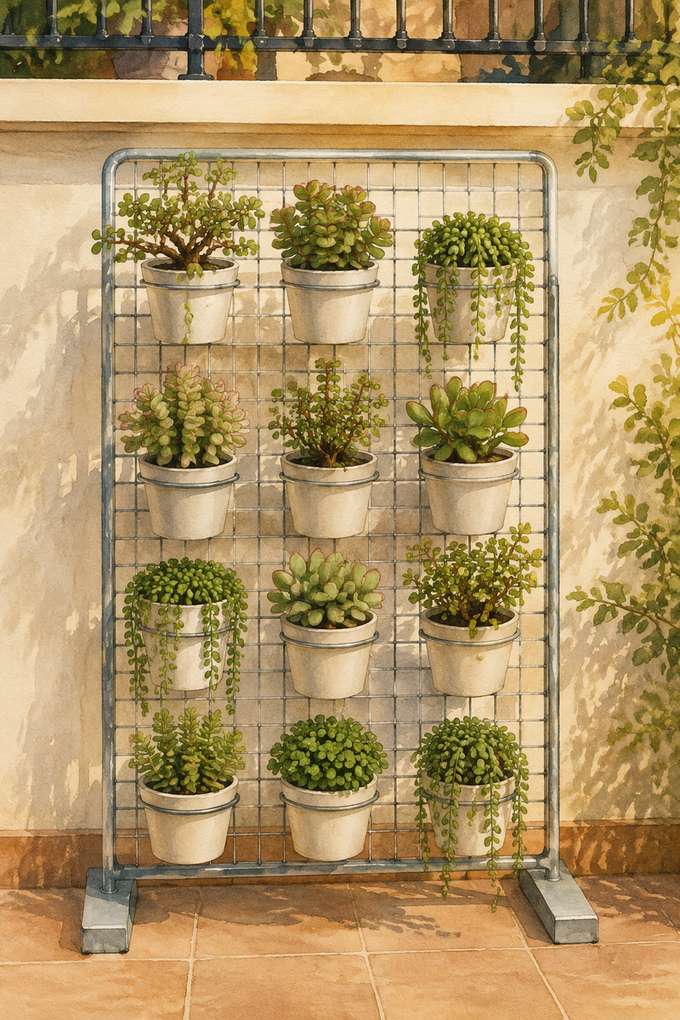
Build a slim plant wall from a 4-foot wire grid fixed to two weighted feet, then clip on 4-inch nursery pots with locking pot rings. The grid stays movable for inspections, and the plastic pots weigh far less than ceramic when all twelve are wet. Use portulacaria, crassula, and trailing string of bananas, placing the longest stems high enough to avoid foot traffic. A grid becomes a sail in strong wind, so keep it below the railing height and add two 15-pound base weights; check your lease before attaching anything to the railing itself. Black pots can cook roots against a west-facing wall. Slip them into pale cachepots or move the whole grid into afternoon shade during heat waves.
4. Stack terracotta pots around one center rod
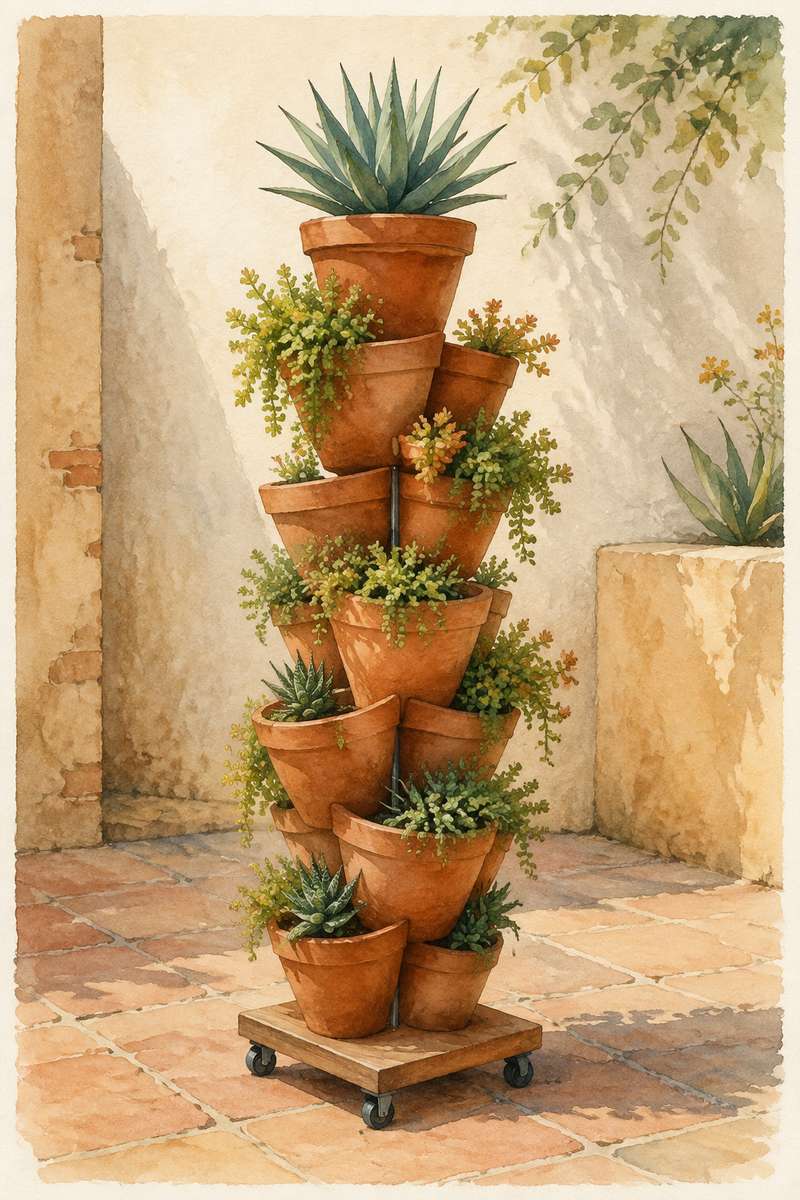
A threaded steel rod through nested terracotta pots makes a stable column with planting pockets at each offset rim. Keep a renter-friendly tower modest: one 14-inch base pot, two 10-inch pots, and an 8-inch top, reaching roughly 3 feet. Plant hardy sedum near the exposed edges, haworthia on the shadier side, and one compact agave on top. Terracotta helps the mix dry after watering, which is useful in dry climates where sudden summer storms still happen. It is also heavy and brittle; this stack may exceed 70 pounds when wet. Assemble it where it will stay, use a wheeled caddy rated for at least 100 pounds, and confirm the balcony's load rules before adding more tiers.
5. Turn a rolling utility cart into a succulent wall
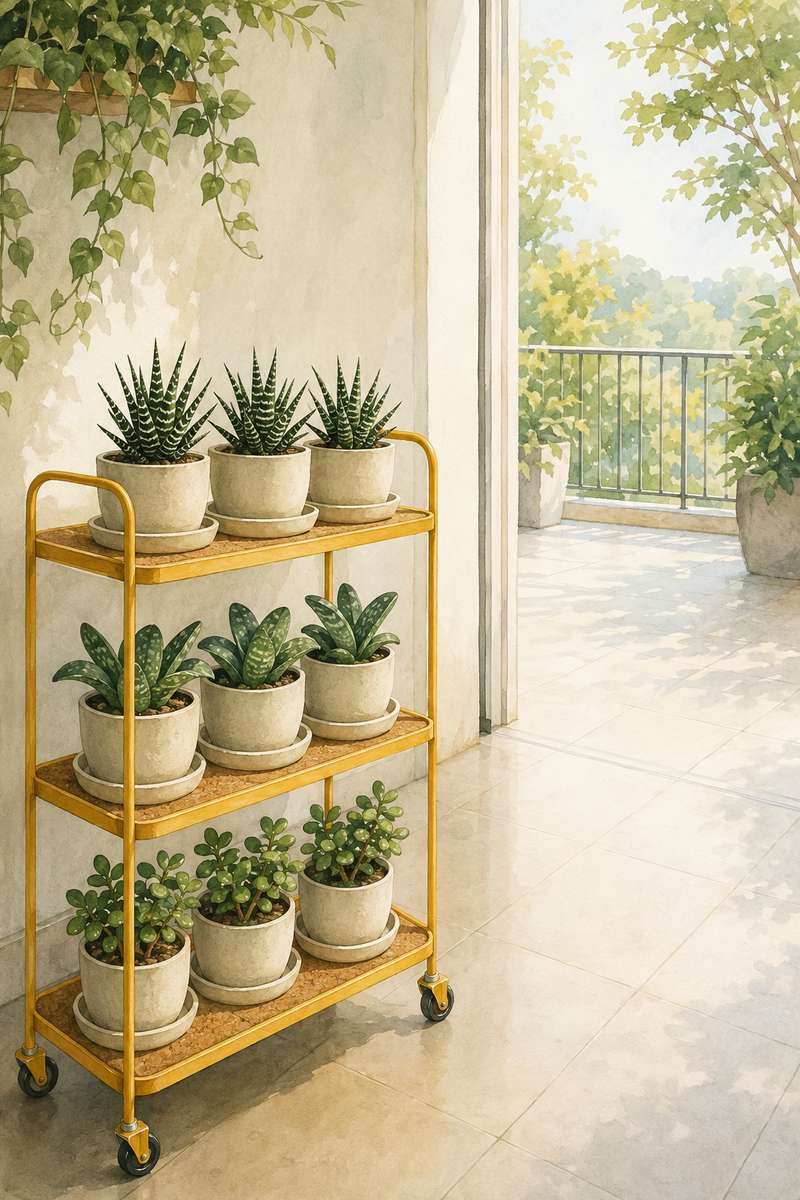
A three-tier steel utility cart provides vertical growing room plus an easy escape route from hail, freezes, or brutal afternoon sun. Fit each shelf with a shallow metal tray and arrange 3- to 5-inch pots of zebra haworthia, gasteria, and dwarf jade, keeping taller plants on the top tier. Locking casters matter on any sloped patio, and a loaded cart should never block the required exit path. Metal shelves heat quickly in a dry climate; cork mats under the trays reduce direct heat transfer, but they do not make a west-facing balcony safe at 110°F. Roll the cart behind a shade screen when leaves bleach or develop tan patches. The downside is visual clutter, so use matching pots rather than hiding drainage inside sealed cachepots.
6. Plant a freestanding rain-gutter rack
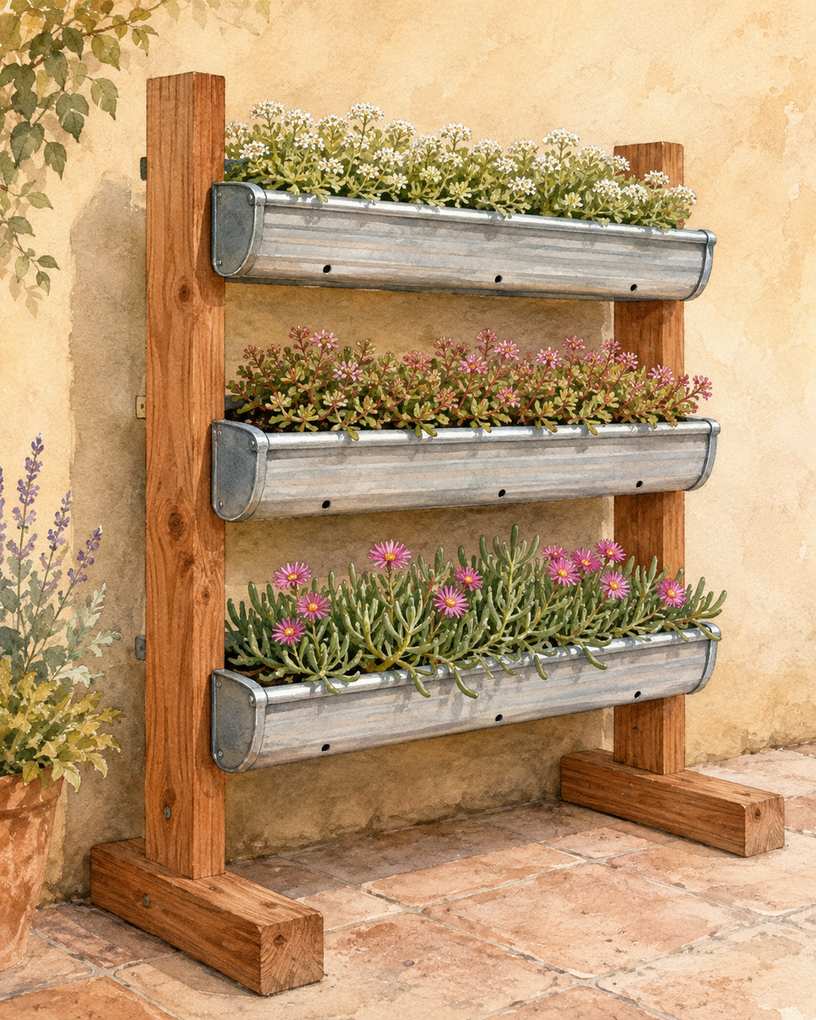
Mount three 30-inch lengths of aluminum gutter to a freestanding cedar frame for long, shallow rows that suit low sedums. Drill drainage holes every 6 inches, cap the ends, and fill only 3 to 4 inches deep with mostly mineral succulent mix. Sedum album, Sedum spurium, and ice plant will knit across the channels without needing the root room of aloe or agave. The frame should have a broad base and sit against a sheltered wall, because full gutters catch wind and become top-heavy after rain. Aluminum also reflects heat onto leaves; leave a 1-inch air gap behind each channel and give plants light shade after 2 p.m. Expect to replace the mix sooner than in deep pots because fine particles wash out through the holes.
7. Fill a narrow strawberry tower with offsets
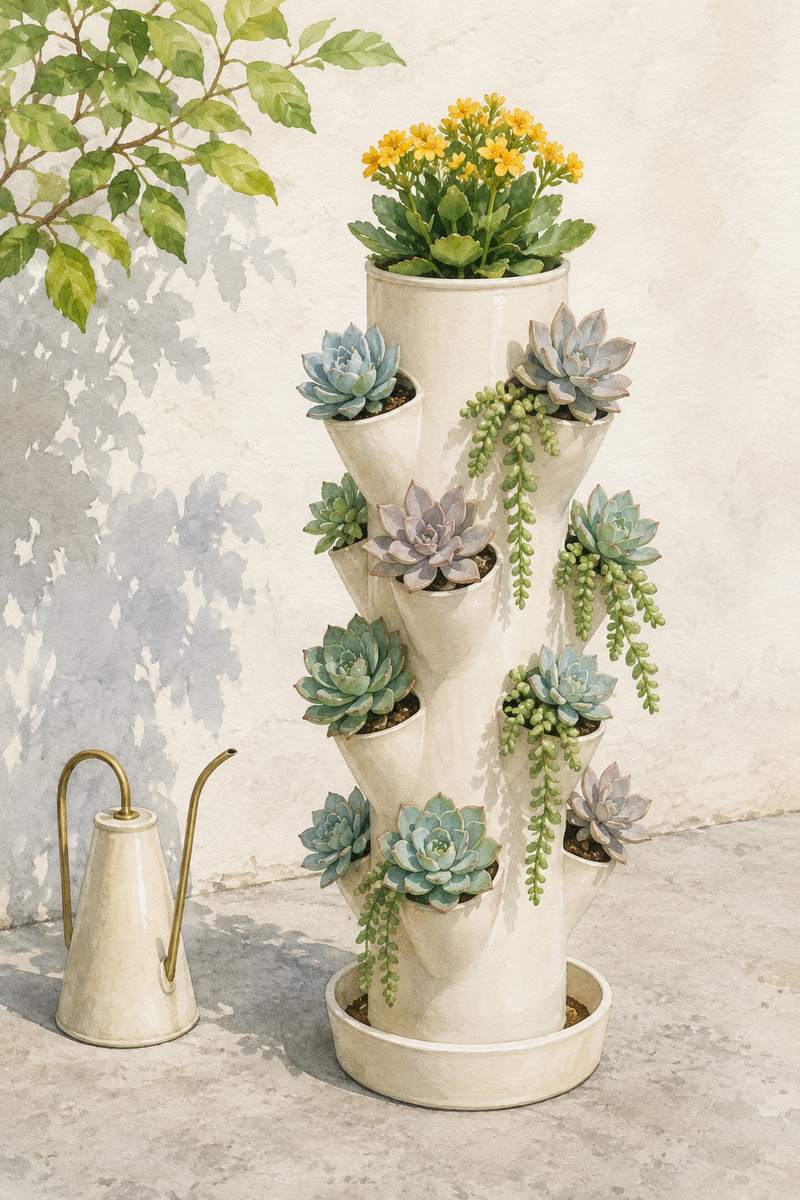
A 20- to 24-inch resin strawberry tower packs many small succulents into one square foot and remains lighter than a ceramic version. Fill the side openings with rooted echeveria pups, graptopetalum, and trailing sedum; reserve the top for a slightly larger kalanchoe. Mix extra pumice into the lower half, where water tends to linger, and turn the tower a quarter turn each week so one side does not stretch toward the sun. The small openings are awkward to replant once roots knit together, and the upper pockets dry before the bottom ones. Water slowly from the top, then spot-water any dry side pocket with a narrow-spout bottle. Place the tower in a saucer, since rusty runoff can mark concrete even when the container itself is plastic.
8. Display shallow planters on a folding screen
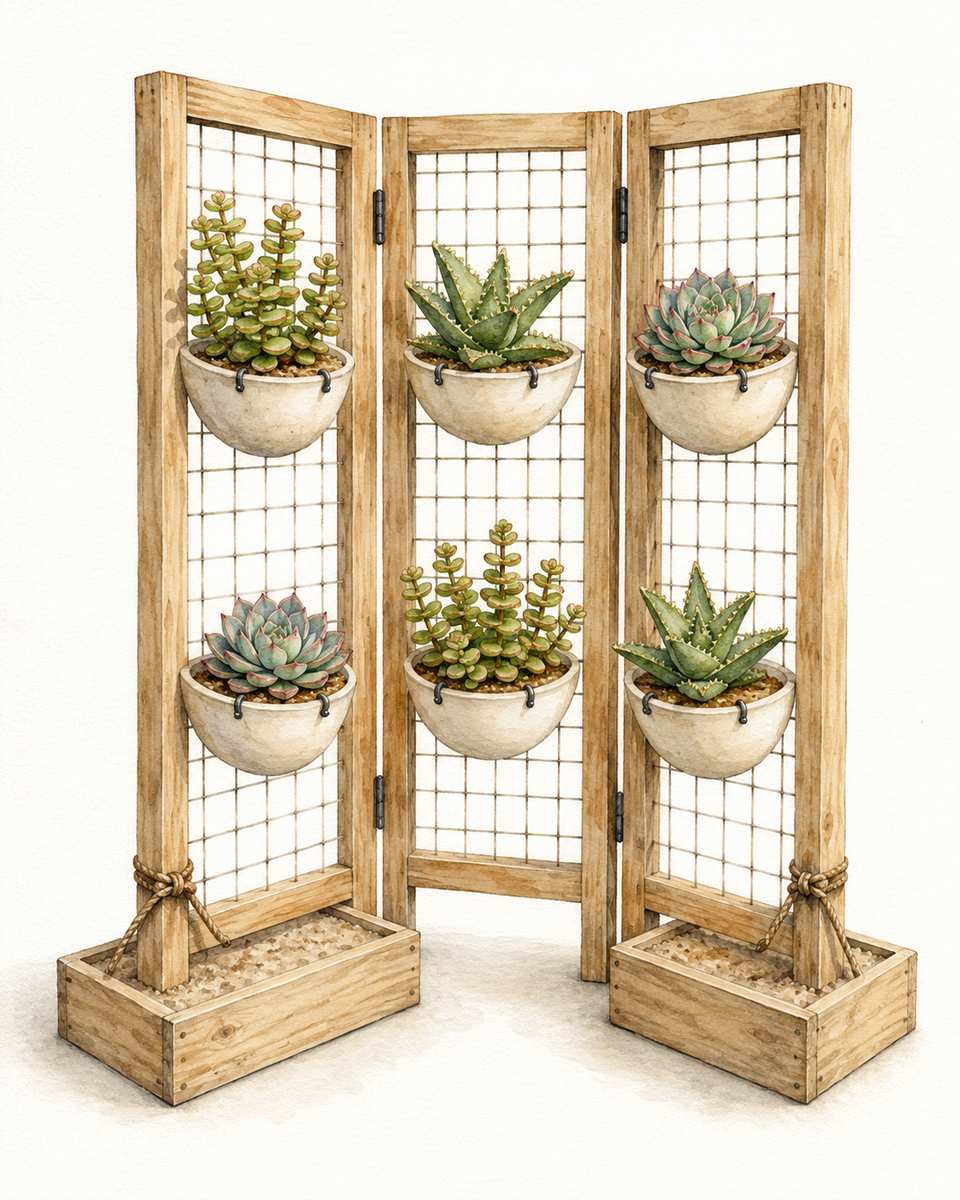
A wooden folding screen can support a light patchwork of shallow succulent planters while hiding an unattractive utility corner. Start with a 4-foot, three-panel screen and hang no more than two 6-inch plastic half-pots per panel using hooks that close fully. Crassula perforata, tiger jaws, and small echeverias give distinct shapes without long, wind-whipped stems. Open the panels into a deep zigzag rather than a nearly straight line, and tie the lower frame to two sand-filled planter boxes. This is still a poor choice for an exposed high-rise balcony; a screen has too much wind area. Seal unfinished wood against irrigation splashes, but keep sealant away from drain holes. Folding it for a move is convenient, though the hooks must come off first or they will gouge the panels.
9. Set a succulent picture frame on an easel
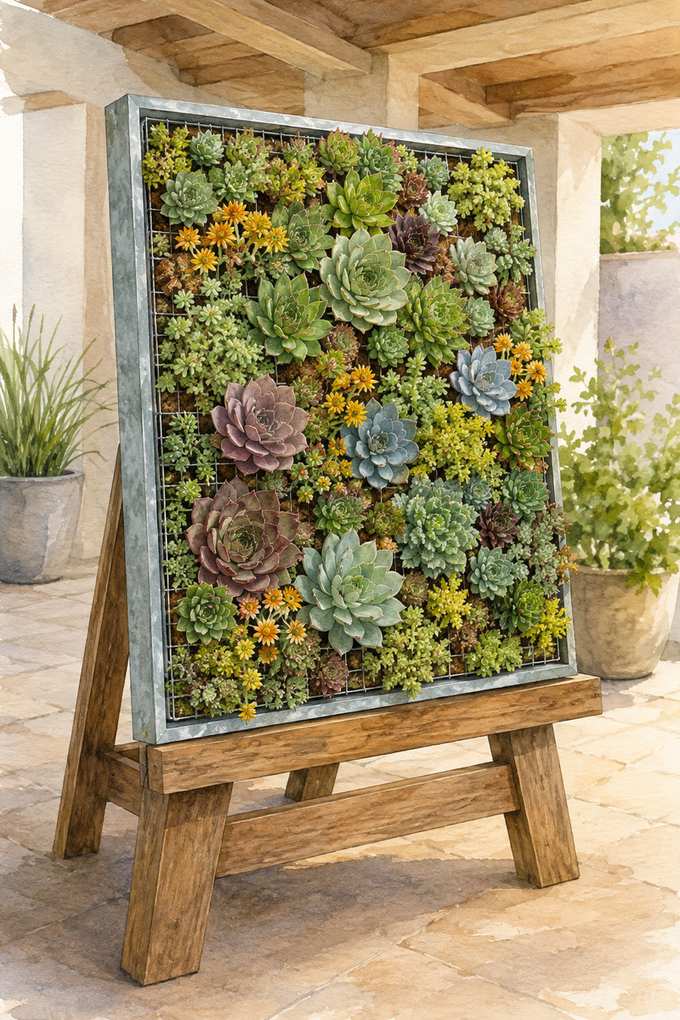
A shallow living frame on a floor easel gives the look of wall art without asking the landlord for anchors. Use a frame no larger than 18 by 24 inches, a 2-inch planting box, galvanized mesh, and cuttings of sempervivum, sedum, and graptopetalum. Root the frame flat for four to six weeks before setting it upright, or the cuttings and mix may slump behind the mesh. An easel needs a wide rear leg and a bottom brace that physically captures the frame; decorative tabletop easels are not stable enough outdoors. Keep the finished piece under cover during heavy rain and rotate it weekly for even light. Its main drawback is maintenance: crowded rosettes need trimming and replacement sooner than succulents growing in ordinary 4-inch pots.
Common questions
- How much weight can a balcony hold?
- There is no safe universal number. Ask the landlord, HOA, or building manager for the balcony's posted load limit, and remember that wet soil, people, furniture, and planters all count. Keep heavy towers near a structural wall only if your building approves that placement; do not assume the edge or railing is stronger.
- How many hours of sun do vertical succulents need?
- Most echeverias and sedums color best with about 4 to 6 hours of bright light, while haworthia and gasteria prefer bright shade or gentler morning sun. Introduce plants to stronger light over 7 to 10 days. Reflected heat from glass or pale stucco can scorch leaves even when the clock says the exposure is suitable.
- How often should I water a vertical succulent garden in a dry climate?
- Water when the mix is dry through the root zone, not on a fixed calendar. Shallow pockets may need water every 5 to 10 days in hot, windy weather, while deeper pots can stay damp longer. Soak each container until it drains, empty saucers, and check lower pockets separately because runoff often keeps them wetter.
- Can these succulent gardens stay outside in winter?
- That depends on the plant and your USDA zone. Many sempervivums and some sedums tolerate freezing weather, but echeveria, aloe, gasteria, and jade are commonly damaged near or below 32°F. Check each species and your local lows, then roll or carry tender plants indoors before a freeze; a fabric cover offers only limited protection in containers.